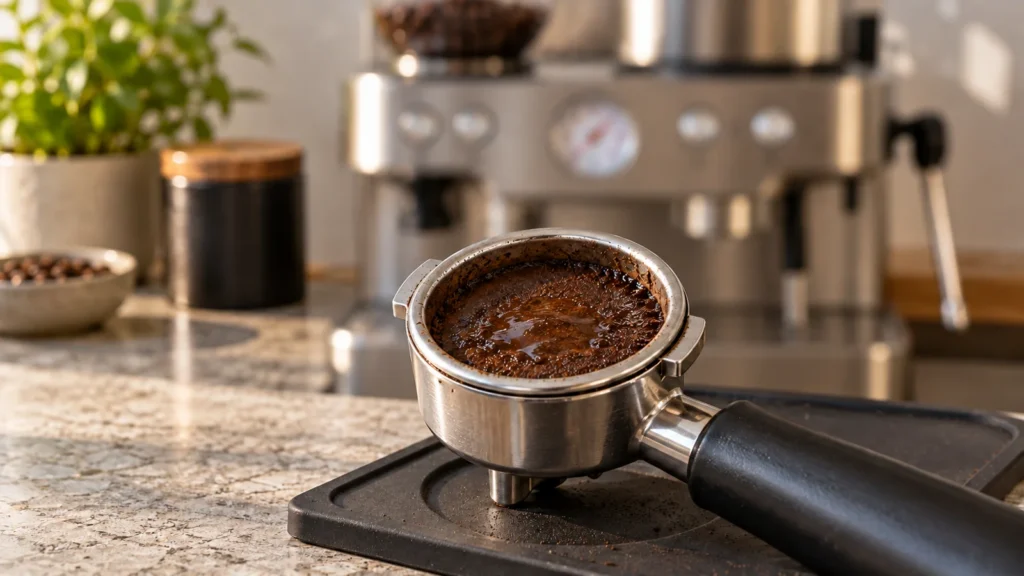
Cover image: representative equipment, not an exact model or control-layout reference. Use the model-specific instructions below for checks and adjustments.
Quick answer: A wet coffee puck in your Breville Barista Express BES870 is a reason to check the shot, not enough evidence to replace a valve. Breville’s manual directs owners with a wet puck to its under-extraction advice. Start by recording the basket, coffee dose, flow and taste. A fast, weak shot needs a different correction from one that barely drips. Keep the dose within the basket’s intended capacity, use a consistent preparation method, and clean a dirty basket. Never unlock the portafilter during extraction or force it if pressure appears trapped. Persistent trouble after those checks needs service diagnosis.
Scope: The original BES870/BES870XL Barista Express with a separate tamper. This is not the Barista Express Impress dosing system, Barista Pro or Bambino. Aftermarket baskets may require a different dose from the supplied baskets.
Look at the coffee before judging the puck
You might see a glossy surface, water sitting above the spent grounds, or a puck that falls apart instead of knocking out neatly. Write down which one occurs. “Wet” is too broad to identify a failed component.
The more useful comparison is what happened during brewing. Did the espresso rush out and taste thin? Did it barely drip? Did the problem begin when you changed beans, baskets or grind settings? Those observations help choose the next check. Puck appearance by itself does not measure extraction quality.
The BES870 manual does list a dry-puck feature, intended to remove excess water after extraction. That description does not turn every damp puck into proof of a failed valve. This guide does not assign a normal moisture percentage or diagnose an internal part from a photograph.
Match the next check to the symptom
| What you observe | Useful next check | Avoid |
|---|---|---|
| Wet puck and fast, weak coffee | Confirm dose and basket, then adjust extraction. | Changing dose, grind and shot volume together. |
| Wet puck and coffee barely drips | Check for an overly restrictive recipe or blocked basket. | Adding more coffee to make the puck look drier. |
| Damp puck, repeatable flow and coffee you enjoy | Record your recipe and check routine cleanliness. | Ordering parts solely to get a neat knock-out. |
| Sudden change plus leaking, abnormal operation or suspected trapped pressure | Stop and describe the combined symptoms to support. | Forcing the portafilter or opening the housing. |
A controlled check you can do at home
Have ready: your clean basket and portafilter, the supplied tamper and Razor tool if available, fresh coffee, and a cloth. A coffee scale and timer make comparisons easier but are optional. Allow about 10–15 minutes for preparation and a small number of comparisons; this is an owner-check estimate, not a repair time.
1. Keep the basket and coffee consistent
Identify whether you are using the 1 CUP or 2 CUP basket and whether it is single-wall or dual-wall. The supplied options are different accessories, not interchangeable dose targets. Keep the same basket and beans throughout your comparison. If you recently fitted an aftermarket basket, check its stated capacity rather than copying a number intended for the original one.
Breville’s current BES870 product page describes an 18 g dose for its 54 mm portafilter. Treat that as manufacturer product guidance, not a demand to force 18 g into every basket or bean combination.
2. Check the dose before brewing
If using a scale, tare the empty, dry basket or portafilter first, then weigh the grounds. Record the actual amount rather than just the grinder dial position. Use the same weighing method next time.
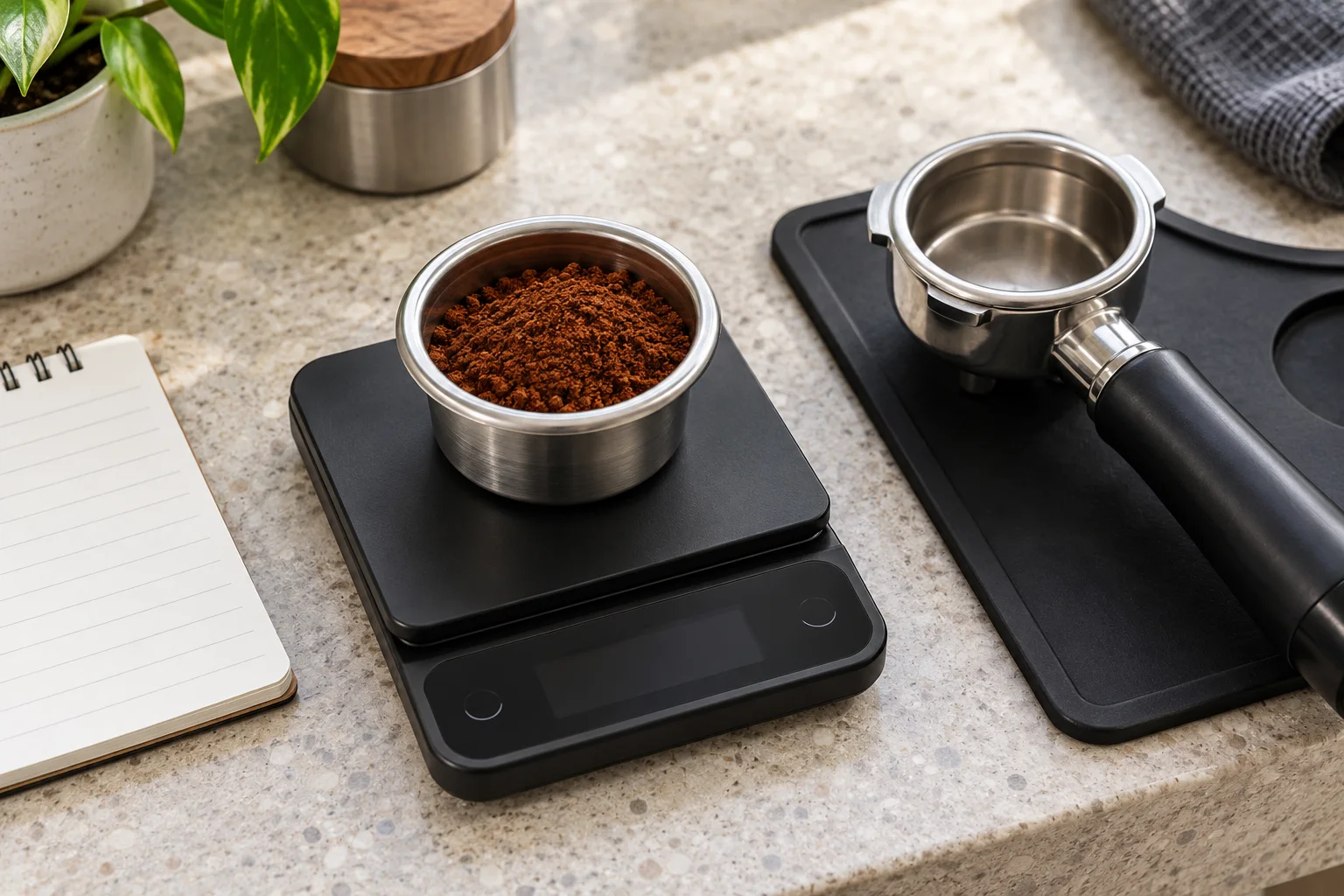
Distribute the grounds evenly and tamp level. Follow the supplied tamper and Razor guidance for the original basket; remove a dosing funnel before trimming with the Razor. Do not leave a heap above the intended dose level or use extra coffee simply to absorb water after the shot.
For detailed adjustment of the two grinder controls, use the Barista Express grinder settings guide. Here, the aim is to make your next comparison repeatable.
3. Change one variable and compare the drink
Keep the selected drink and preparation method unchanged. Note dose, beverage amount, time using the same start point, and taste. A small notebook entry is enough; there is no need to chase a universal stopwatch number just to fix puck appearance.
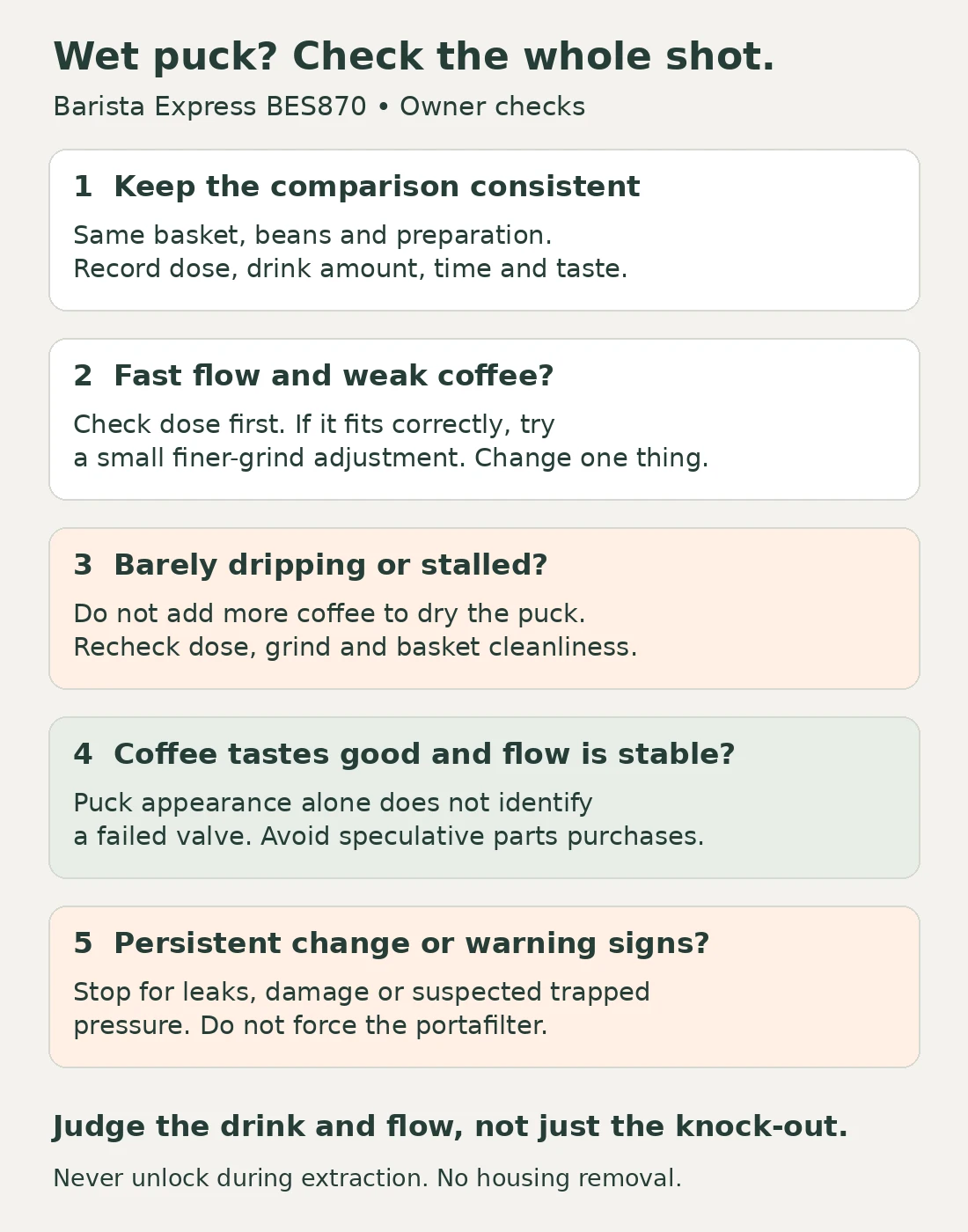
If the dose fits correctly and the shot runs fast and tastes weak, try a small finer-grind adjustment. If it barely drips, do not keep going finer or increasing the dose. Recheck the dose and basket, and use the restricted-flow checks when appropriate. Do not repeatedly run a stalled shot.
4. Check the basket before blaming the machine
Old coffee residue or blocked holes deserve attention before parts replacement. Once the equipment is safe to handle, follow the BES870 basket and portafilter cleaning guide. Use the approved cleaning cycle when required; it is a different task from descaling.
Do not improvise with stronger chemicals or run maintenance cycles over and over because a puck remains damp. If cleaning restores normal flow but the used grounds still look moist, report those as separate observations.
When to stop and ask for service
A wet puck alone does not establish a solenoid, pump or seal fault. Escalate a sudden, persistent change after a consistent recipe and correct cleaning, especially if it comes with leaking or unusual operation. Send support your model number, basket type, dose and a short description of the shot. Include what changed just before the symptom began.
Never loosen the portafilter during a shot. If pressure appears trapped or the handle resists removal, stop, switch off, let the machine cool and seek guidance instead of forcing it. Stop immediately for a burning smell, damaged wiring or water near electrical components; isolate power only if safe. This article does not instruct you to open the housing.
No replacement part is specified here because the symptom does not identify one. Basic recipe checks require no purchase, and a service estimate should follow a diagnosis.
Common questions
Should I tamp much harder to dry the puck?
Do not turn tamping force into another uncontrolled variable. Aim for an even, repeatable preparation and assess the espresso. More force is not a substitute for matching dose and grind to the basket.
Will a puck screen fix it?
This guide does not recommend buying one as a repair. It changes the setup you are trying to evaluate. First establish how the machine behaves with its normal basket and a consistent recipe.
Does water in the drip tray prove the valve is healthy?
No. Tray water by itself is not a component test. If your concern is how quickly the tray fills, use the separate Barista Express drip-tray guide and note when the water appears.
Sources and model help
This is a documentation-based troubleshooting guide, not a claim of hands-on testing. The illustrations show representative equipment and checks; they are not service diagrams or exact replacement-part photographs.
- Breville BES870 instruction manual — dry-puck feature, extraction guide, dosing and safety.
- Breville: tamping and trimming the dose.
- Breville: interpreting extraction results.
- Breville BES870 product specifications — supplied baskets, portafilter and dose guidance.
Return to the Barista Express model guide for other symptoms.