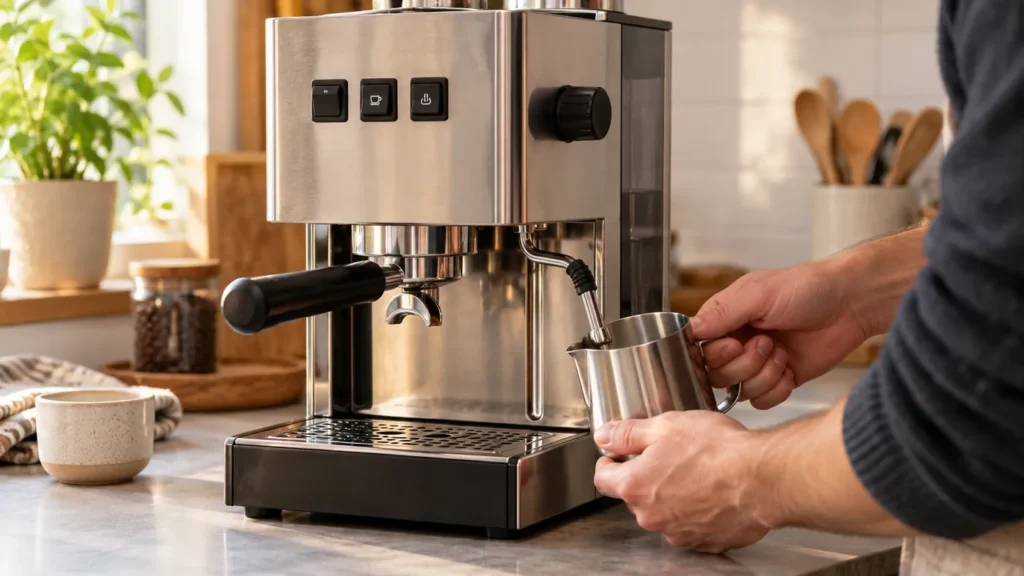
Gaggia Classic Pro steam wand not working? First separate a steam problem from a water-flow problem. If hot water still comes from the wand but steam is weak, check steam mode, warm-up and the removable nozzle. If neither hot water nor steam comes out, check the tank and use the priming instructions for your exact Classic revision before assuming that the wand itself has failed.
Applies to: Gaggia Classic Pro / Classic Evo Pro manual espresso machines with a professional steam wand. Classic E24 and regional variants can differ. Compare the rating label and the matching Gaggia manual before removing a nozzle or following a button sequence. This article covers checks outside the case.
Safety: Steam and metal parts can burn long after the switch is turned off. Keep hands away from the outlet during tests; switch off, unplug and let the wand cool completely before touching or unscrewing the tip. Stop if water reaches the switches or power cord, the machine trips a breaker, or you smell burning.
Want guided checks? Start the Classic Pro steam-wand diagnostic wizard. Check your model revision before following any procedure.
What exactly is the wand doing?
| What you observe | Useful first check | Where to look next |
|---|---|---|
| Only a short burst of water, then steam | Purge condensation into an empty pitcher after the steam-ready light comes on | This can be normal at the start of steaming |
| Hot water works, but steam is weak | Check steam mode, warm-up and the accessible nozzle | Residue at the tip or insufficient steam temperature |
| Strong steam, but milk does not foam | Change milk depth and pitcher position | Technique or a dirty tip, rather than a silent pump |
| No hot water and no steam | Check reservoir level and the circuit-loading procedure in the manual | Air in the water circuit or another flow fault |
| Wand output is weak and group-head flow is also weak | Compare both outlets without the portafilter | A machine-wide flow restriction needs separate diagnosis |
1. Give the machine time to reach steam temperature
Fill and correctly seat the reservoir. Put an empty metal pitcher under the wand, turn on the machine and select its steam mode. On the Evo/Pro manual, the steam temperature indicator is the cue to begin; its example warm-up is about 15–20 seconds, but use the light rather than a stopwatch. Open the knob briefly to release condensation, close it, and only then start the steam test. A little water at the beginning does not by itself mean that the wand is broken.
Make the test brief. Gaggia’s Evo/Pro instructions limit a continuous steaming session to 60 seconds because the small boiler can empty. If the wand was used for a long time and suddenly faded, stop and consult the manual’s circuit-loading procedure before trying again. Never leave the pump running dry.
2. Compare hot-water flow with steam
With a container under the wand, use the hot-water dispensing procedure for your revision. On the Evo/Pro manual this involves opening the steam/hot-water knob and using its brew and steam controls together. Keep the outlet pointed into the container. You are checking for a steady flow, not running a long cleaning cycle.
- Hot water flows normally: the machine can move water through the wand. Return to steam mode, wait for its indicator and inspect the tip after the machine cools.
- Neither hot water nor steam flows: stop testing repeatedly. Check the tank, its seating and the intake tubes described in your manual. A circuit air bubble is one possible cause; follow Gaggia’s loading procedure for the exact controls on your machine.
- Both wand and group head are weak: the issue is wider than milk frothing. Use our Classic Pro troubleshooting guide for the safe group-head comparison, then ask Gaggia for service if flow does not recover.
Do not diagnose a pump, heating element, valve or circuit board from a single weak-steam test. Those components need professional inspection if external checks do not resolve the symptom.
3. Clean the removable steam nozzle, if your manual allows it
Switch off, unplug, and let the wand become completely cool. Wipe milk residue from the outside with a damp cloth. The Evo/Pro manual allows its nozzle to be unscrewed and rinsed under running water for deeper cleaning. Remove only the part shown for your revision; do not force a stuck connection, take apart the steam valve or push a metal pick into the wand.
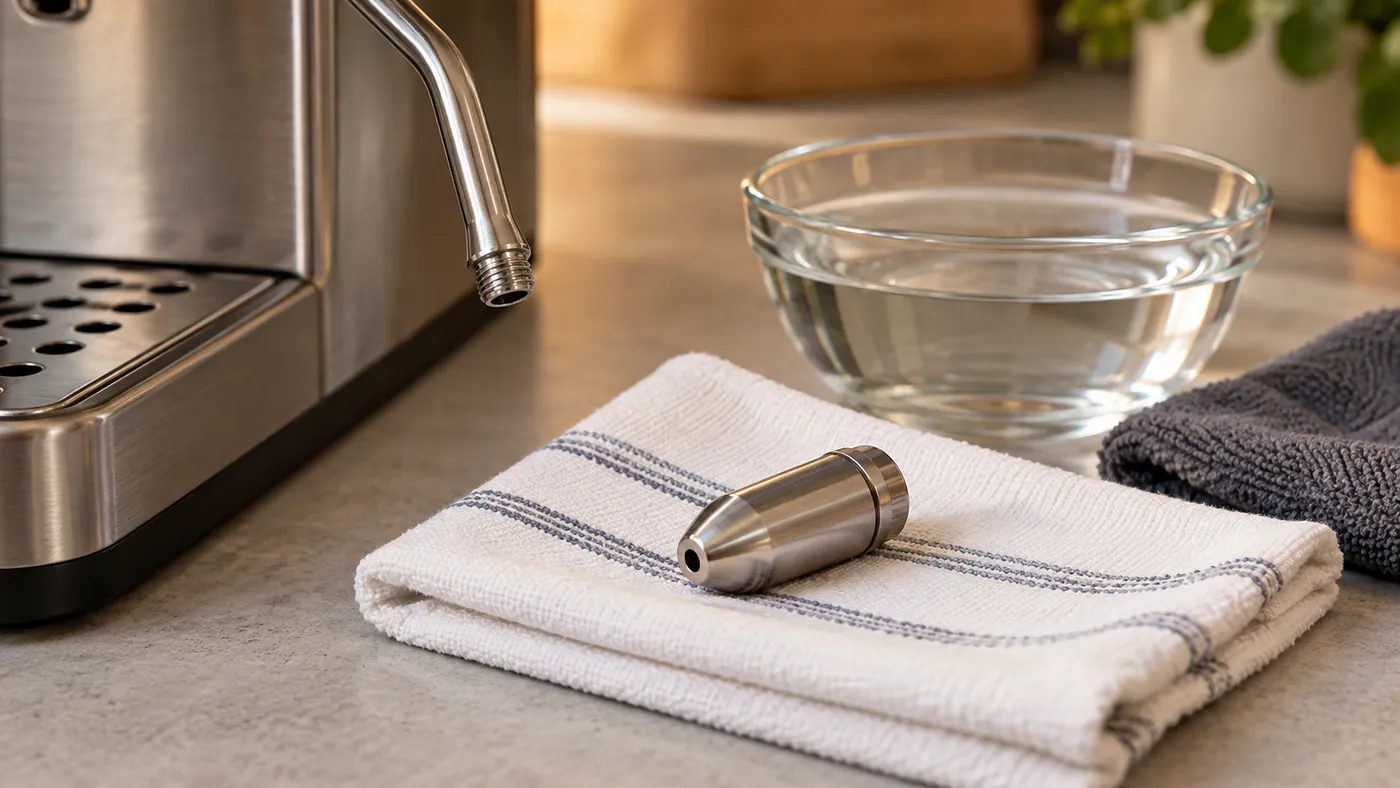
Rinse the removed tip, clear visible milk residue without enlarging its opening, and reinstall it securely as the manual shows. Once everything is back in place, reheat the machine and purge steam into an empty pitcher for a second or two. Gaggia recommends wiping and purging the wand after each milk drink to keep the outlet clear.
4. If steam is strong but milk stays flat
A working wand can still make large bubbles or hot, untextured milk. Start with cold milk in a clean pitcher. Put the tip just below the surface near the pitcher wall so the milk can roll, then lower it slightly as the milk warms. A tip buried too deeply will not draw in enough air; one held too high makes large bubbles. These are technique checks, not proof of a hardware fault.
When to stop and request service
- No water emerges from either outlet after the reservoir and model-specific circuit-loading checks.
- The steam-ready indicator never behaves as described in the manual, or the machine does not heat.
- Steam or water leaks from behind the panel, knob or electrical area.
- The nozzle cannot be removed normally, or output remains weak after accessible cleaning.
Tell support the exact model code, whether hot water flows from the wand, whether water flows from the group without the portafilter, and which external checks you made. The Gaggia Classic Pro model page links to the matching manual and other guides.
Manufacturer sources: Gaggia Classic Pro/Evo/E24 manuals (steam use, circuit loading and cleaning); Gaggia semi-automatic maintenance. Last checked: September 26, 2026.