Quick answer: If a Philips 3200 LatteGo makes a full cup but the coffee tastes thin, first brew a black espresso with the aroma strength raised and a moderate drink volume. If that cup improves, the original drink settings were the likely cause. If a normal-size espresso is still watery, rinse the brew group and its filter, then reassess. Change the grinder only after those checks, only while it is grinding, and by one notch at a time. A machine that dispenses only drops or no coffee needs a different water-flow or coffee-funnel diagnosis.
This guide is for the Philips 3200 family, including LatteGo variants such as EP3246. Buttons and accessories vary by EP32xx suffix and region; use the number on your machine’s label to open its exact manual on Philips model support. The cover is an original editorial image of a generic machine, not a photograph of the EP3246 control panel.
Identify the symptom before changing anything
Make one black espresso with the same beans and cup you will use for the retest. Taste it before adding milk. This separates a weak extraction from a large or milk-heavy drink that simply tastes less concentrated. Note whether the cup fills normally and whether the grinder runs. Change one variable at a time so you can tell what helped.
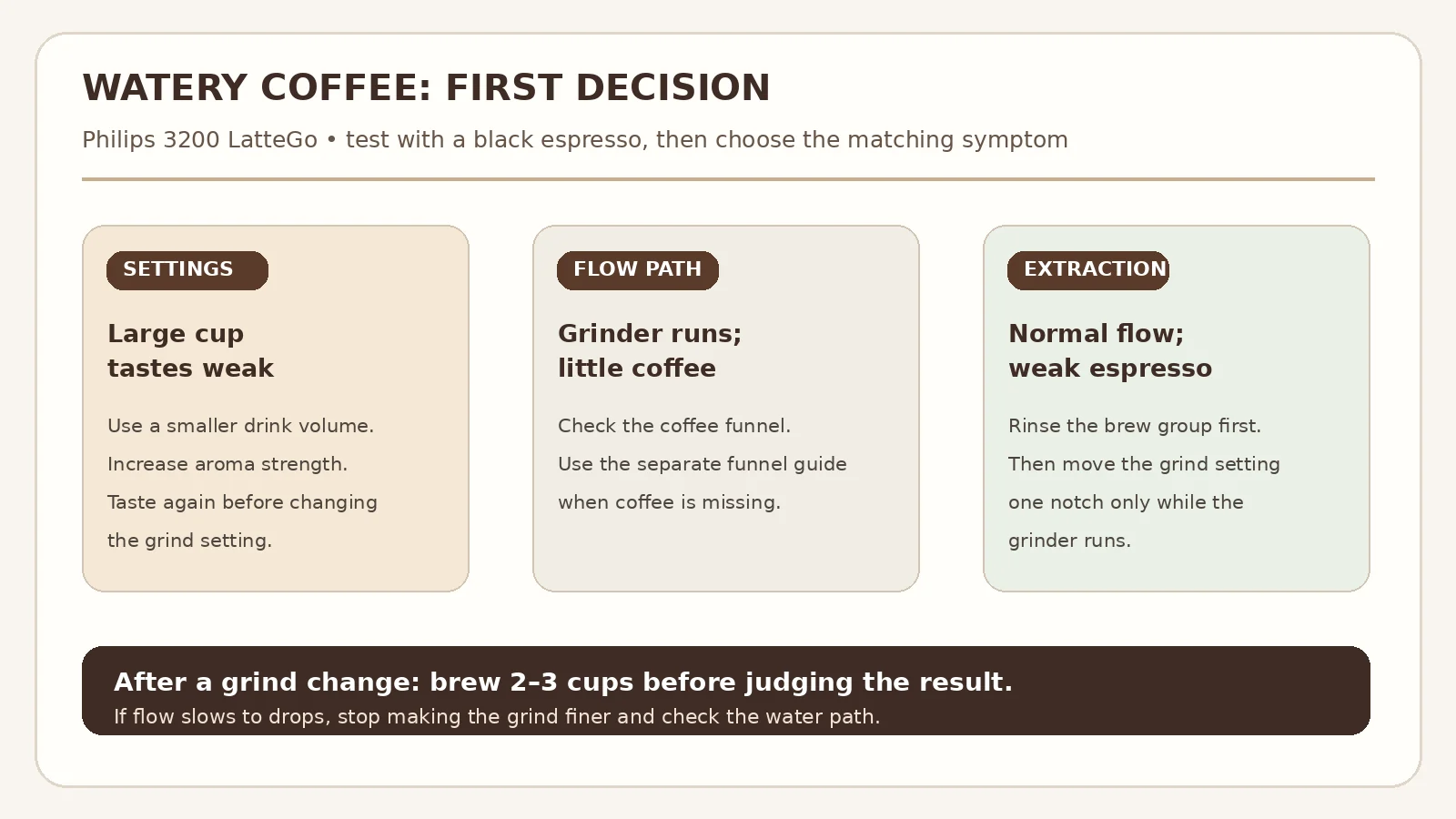
| What you observe | Start here |
|---|---|
| A large coffee is weak, but a smaller espresso tastes fine | Reduce drink volume or raise aroma strength. |
| The grinder runs but little or no coffee reaches the cup | Use the blocked coffee funnel guide; also check water-flow symptoms. |
| A normal-size black espresso flows normally but is still thin | Rinse the brew group; only then consider a careful grind adjustment. |
| The machine is new | Brew a few more cups before judging a stable setting. Philips notes that initial extraction can take time to settle. |
What you need
- The machine’s EP32xx model number and its manual.
- Fresh water, a cup for comparing drinks, and a clean cloth.
- Lukewarm running water for the removable brew group.
- Only if the pre-ground funnel is obstructed: the handle of a spoon, used according to the Philips support procedure. Do not put tools into a running grinder.
No replacement part is justified by a watery cup alone. A new grinder or brew group should follow a confirmed fault, not a taste change.
Step 1: Rule out an oversized drink setting
Choose a black espresso rather than a milk recipe. Set a moderate volume and increase the aroma or strength selection on the machine’s control panel. Brew and compare. Philips identifies cup volume, aroma strength and grind as settings that affect coffee strength; its support advice starts with a higher aroma setting and a medium cup volume for a stronger drink.
If the shorter cup tastes right, keep the setting that works. Descaling or replacing the grinder would not address an overly long recipe. If the milk drink alone tastes weak while black espresso is fine, adjust the coffee-to-milk balance of that drink. For a frothing problem, use the LatteGo milk guide.
Step 2: Rinse the brew group if a normal espresso remains watery
- Switch the machine off and wait until its shutdown noises stop. Do not remove the brew group during a brew or descaling cycle.
- Open the service door and remove the brew group in the way shown for your exact model. If it will not release, do not force it; use the brew group stuck guide.
- Rinse the removable brew group thoroughly under lukewarm running water, paying attention to its filter area. Let it air-dry before reinstalling it. Philips recommends rinsing the brew group weekly because a dirty filter can disrupt flow and affect taste.
- Reinstall it fully, close the door and brew the same test espresso. Compare with the first cup before changing another setting.
This is an owner-level cleaning step. Do not remove the housing or work near electrical components to investigate watery coffee.
Step 3: Check whether the coffee funnel is actually blocked
If the grinder can be heard but the machine dispenses little coffee, or drops grounds without brewing a proper cup, treat that as a feed-path symptom rather than simply weak extraction. Philips lists a clogged pre-ground coffee funnel among causes of watery coffee and gives a cleaning procedure with the machine switched off and the brew group removed. Follow the model-specific path in our funnel guide. Never probe the funnel while the machine is running.
If water itself is missing, move to the tank, filter and air checks. If coffee emerges only in drops after a grind change, the setting may be too fine; do not keep turning it finer.
Step 4: Adjust grind only if flow is normal and the coffee is still weak
After the settings and cleaning checks, try one notch finer if a normal espresso still tastes thin and dispenses at a normal rate. Philips says the grind dial can be adjusted only while beans are being ground. Start a black coffee, press the adjustment knob down in the bean hopper and turn it just one notch during the grinding sound. Some variants use the adjustment key on the coffee scoop; follow your model’s manual. Keep fingers and loose objects clear of the bean feed.
Brew two or three coffees before deciding whether that single change helped. Philips warns against moving more than one notch at a time because it can damage the grinder. If the flow becomes restricted or the machine strains, stop making the grind finer and return toward a coarser setting on a subsequent grind cycle. The direction and marking should be confirmed against the exact EP32xx manual.
When to stop and get service
Seek Philips support or a qualified service technician if the brew group cannot be seated without force, the grinder makes an abnormal mechanical sound, the machine repeatedly discards grounds without brewing after the documented cleaning check, or normal water flow cannot be restored. Do not dismantle the grinder, pump or energized housing for a watery-coffee complaint. Describe the model number, whether the grinder runs, cup output, warning lights, and which owner-level checks you already performed.
FAQ
Should I descale the Philips 3200 because the coffee is watery?
Not as the first response to a full cup that merely tastes weak. Compare settings and clean the brew group first. If the Calc/Clean indicator is on or flow is restricted, follow the 3200 descaling procedure for your exact variant.
Does a wet coffee puck prove that the machine is broken?
No. Judge the drink, flow and repeated behavior together. A single wet puck can follow an automatic rinse or lighter strength selection; do not buy parts on that observation alone.
Why did a finer grind make the coffee come out in drops?
Too fine a grind can restrict the path. Do not turn the dial repeatedly while idle. Adjust one notch toward coarser during the next grinding cycle and test after two or three cups. If the machine still has little output, follow the water-flow guide.
Can I clean the brew group while the machine is on?
No. Switch it off and let the shutdown cycle finish before removing the brew group. The separate grounds-container warning reset is a different procedure done while powered on; do not confuse the two.
Sources and model scope
- Philips Support: Coffee from my Philips Espresso Machine is watery — causes, settings, weekly brew-group rinse and funnel check.
- Philips Support: How to adjust the grinder setting — adjust during grinding, one notch, then brew two or three cups.
- Philips EP3246/74 support and manuals — identify the exact EP32xx variant before following panel or part instructions.
Related: Philips 3200 LatteGo model hub · all 3200 troubleshooting topics. This guide documents safe user checks; it does not claim a specific part failure without inspection.